What Does Transformation Mean for an Architecture Firm?
Architecture is a constantly evolving practice, and architecture firms have a choice: respond to and ride the wave of change, or shape the future of architecture and the built environment. Read on to learn about how Dekker is meeting this moment.
Architecture in flux: poised for new opportunity
Transformation is not just about adopting the newest technology. Architecture has always responded to and evolved alongside technology. From simple tools that enable straight lines to CAD and 3D design visualization, technology has always been a part of how we design the built environment.
Despite being shaped by changing technology, architecture as an industry and practice has stayed resistant to true transformation. While the world becomes more interconnected and traditions challenged, architecture has, for the most part, sought to preserve the status-quo. To doing things how they have always been done, even if we’re using different tools. To not question why do we do what we do, and for whom?
But the world is changing, and how people interact with the built environment is rapidly transforming. Whether it be technology-enabled learning environments, new modalities of healthcare, hybrid workplace environments, or increasingly flexible and collaborative lab spaces, clients require designs that are quickly adaptable to a rapidly shifting world.
Architects need to not only respond to the changes in the world – there’s a very real opportunity for architects, engineers, and designers to be active participants in how we interact with the built environment now and into the future.
At Dekker, we see this as an opportunity to push the limits of what’s possible in the built environment. How do we plan, design, and engineer flexible, high-performance spaces that leave the biggest impact on the people that use the space? Our goal is to be part of a movement that shapes the future of design, through intentional transformation, measured innovation, and responsible technology use.
We are centering what makes design human – our commitment to showing up as stewards of your vision for a space, and our entrepreneurial mindset that keeps us pursuing improvement and refinement. We are transforming how we do what we do best, not who we are.
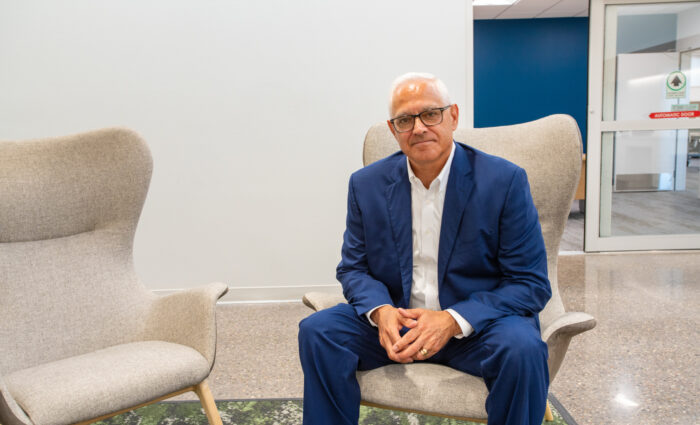
Felix Diaz, Chief Transformation Officer: How we design with and for people

Here is what Felix Diaz, Chief Transformation Officer, says about how the foundation for transformation starts with centering people in every design.
In a rapidly changing world, what sets Dekker apart is not our technology stack, or our efficient processes – it’s our dedication to showing up. It’s how we center the human in every design. And that is the foundation that creates true transformation that betters the world.
When I first started working at Dekker, what struck me immediately was the culture of care and the drive to do whatever it takes. This culture is evident in every project that we touch, and how we care for each other, our clients, and our partners that help bring projects to life. At the hear of all our designs are people – the people who work, play, study, heal, and live in the spaces we design.
It’s that culture of care that leads our people to always seek better ways of doing things. No other architecture firm that I’ve heard of possesses the entrepreneurial spirit that Dekker has, or acts as an incubator for good ideas and businesses, supporting staff to realize their big ideas.
Dekker is a collective of people who are always asking: is there a better way to do this? How can we do better? We aren’t afraid to move beyond “this is how it’s always been done” to “how could we do this better?”
It’s my job, as Chief Transformation Officer, to amplify what makes us such a unique firm; to help us scale our service-leadership and questioning spirit. Transformation is not about abandoning what’s gotten us to this point – it’s about humanity being our north star as we navigate change and grow to better serve our clients, partners, and staff.
How we partner with clients, our service-focused mindset, our commitment to a safe, adaptive, and impactful built environment – the things that make Dekker stand out will always be at the foundation of who we are and what we do.

The three pillars of what comes next: Transformation, Innovation, Technology
Using our human connection as the foundation, we are investing in three pillars to lead us into the future: transformation, innovation, and technology.
Transformation:
Transformation is a continual process of improving what we do best. We are committed to taking a close look at how we work with each other and others, so we can always show up as a knowledgeable, trusted partner for our clients.
These efforts start with cultivating the leader that is within each and every one of us – investing in leadership training and professional development so we can help our people transform in to exactly who they want to be.
By cultivating the leader in each of us, we can improve collaboration across the firm and with our partners and leverage our expertise to design better projects that do more.


Innovation:
Innovation is not just about staying on the cutting edge – it’s being the whet stone that sharpens the edge. To do that, we closely examine every aspect of the work we do with the challenge of “there must be a better way to do this”.
Innovation is always additive. We don’t throw out what’s working, but we address what’s lagging, while keeping the ship moving forward.
Innovation does not happen in a vacuum, and it doesn’t happen spontaneously. That’s why we are intentional about incubating “mini startups” from within that give our team the space to explore new ways to improve our processes.
Our dedication to innovation results in cleaner, more efficient processes that enable us to stay focused on the ideas that leave the biggest impact, without the bloat of endless exploration.
Technology:
Without investing in transforming how we show up and innovating our design process, technology on its own is insufficient to contribute to the evolution of architecture as a practice. That’s why we use technology to help amplify our design process.
Intentional, meaningful, ethical use of technology like AI ensures that we’re putting people first in everything we do. Advanced technologies enable us to explore and iterate on multiple ideas while staying focused on project goals, budgets, and timeline.
Powerful data collection and analysis tools put data-informed decision-making back into the hands of stakeholders and helps us test design assumptions.
Tools like Virtual Reality and 3D design visualization provide quick proof of concept without investing millions, helping secure buy-in and funding from stakeholders.

Why are we, as an architecture firm, talking about transformation, innovation, or technology? Because for us, it’s always been about more than the building. We can’t build spaces for people without centering people. And people are always changing. Transformation at Dekker is not about responding to what other architects in the industry dictate as “change”, but responding to what our clients actually want.
Related Content

Design a career path with more bridges.
Looking to break down the walls of the status quo?